80% of driver injuries happen when the truck’s not moving. Here’s why
January 7, 2026
The opposite of safety is danger, and most people assume that danger lives on the road. Accidents and crashes certainly bring injuries, but for professional drivers the leading risks are far more mundane: routine tasks outside of the truck.
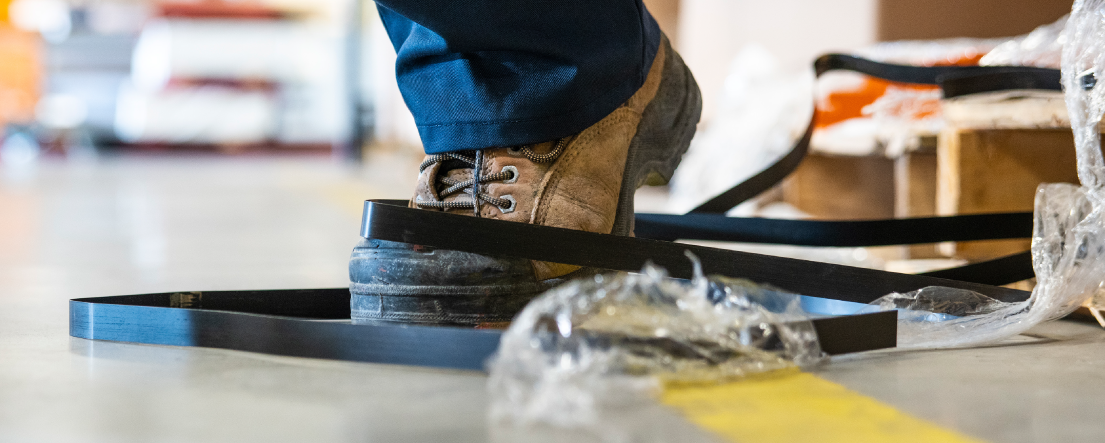
Forget the dramatic scenarios of icy highways, impaired motorists, or sudden lane changes. Crashes remain costly for fleets, but injury-related insurance claims point to a different risk pattern. 80 percent of injuries occur when the vehicle isn’t moving, and many of those claims come from everyday movement: getting in and out of the cab, walking a yard, cranking landing gear, or working around forklifts. A driver is more likely to get hurt slipping on wet pavement while climbing down with their hands full—paperwork, a clipboard, anything—than from a four-wheeler cutting in.
In the November 2025 webinar Inside Workplace Injury Prevention, CarriersEdge President Mark Murrell and ATA Comp Fund’s Victor Whatley broke down the numbers behind these everyday risks, and the picture looks very different from what most fleets prepare for.
Claim Cost by Cause
|
Motor Vehicle Accident (MVA)
|
29%
|
|
Slip, Trip Fall
|
24%
|
|
Strain
|
20%
|
|
Struck By
|
12%
|
|
Other
|
5%
|
Source: ATA Comp Fund
It’s not the big stuff. It’s the basics
The bulk of workplace injuries happen in transition. Those few seconds when a driver is stepping, reaching, lifting, turning, or climbing without thinking about their footing or surroundings are the moments Whatley’s claim data shows as most vulnerable. And because these movements are routine and predictable, the injuries tied to them should be entirely preventable.
Most strains and sprains follow the same pattern. Landing gear becomes an injury risk when someone muscles through resistance instead of resetting. Fifth wheels get pulled bare-handed because the tool is “somewhere in the truck.” Drivers twist or reach to catch themselves when they lose balance on uneven ground.
Struck-by injuries add another dimension. Nearly a fifth of claims come from forklifts, shifting freight, or tight dock spaces. As Whatley explained, cargo areas have “no-zones” just like roadways do. If a forklift is operating on one side of a trailer or pallet, standing on the opposite side exposes anyone there to the risk of material being pushed over. Drivers don’t even have to be close to the machine to get hurt. One severe case involved a large pallet of sheetrock that shifted during a turn and toppled onto a driver who wasn’t near the machine at all, causing a life-changing head injury. The same principle applies to the warehouse “domino” incidents many have seen online, when freight starts falling, everything around it becomes hazardous. These aren’t freak accidents. They happen when drivers don’t maintain visual contacts with forklift operators or step into areas where they can’t be seen.
For fleets, the takeaway is straightforward: these aren’t unusual scenarios. They’re normal moments where situational awareness can make the difference between a normal shift and a preventable injury.
Three-point contact: the habit that prevents most falls
Drivers know the three-point contact rule. They’ve seen it in orientation, on a poster, or as a quick reminder in passing. But knowing isn’t the same as doing, especially when they underestimate how often they climb in and out of the cab. One fleet tracked it: 42 entries or exits in a single shift. That’s 42 times a driver is exposed to a preventable fall.
Most injuries happen on the descent. Drivers are careful climbing up, then careless coming down, stepping off the last rung, turning outward, holding a drink, or planting a foot on an icy or uneven surface. Whatley notes that three-point contact isn’t just “face the cab and grab something.” His team teaches an eight-step method focused on full control of the body from the first rung to the ground.
Fleets that treat this seriously don’t relegate it to orientation. They make it part of the road test (“If you don’t enter and exit correctly, we’re done here”), put QR-code reminders on the cab, and train managers to watch for it when drivers aren’t expecting it. A quick correction becomes part of the culture.
And that one small behavior, reinforced every day, prevents injuries that cost fleets thousands.
Footwear and equipment still get ignored
Here’s where the industry trips over its own logic. Flatbed fleets insist on work boots, but dry-van drivers are often allowed to wear running shoes because “they’re not doing heavy cargo.”
Running shoes are comfortable, yes. They’re also terrible on diesel-slick fuel islands, wet docks, icy yards, or warehouse floors. They have soft rubber soles that degrade quickly and almost no ankle support. Whatley was blunt: comfort and safety aren’t mutually exclusive anymore. Modern slip-resistant work shoes exist, and drivers can wear them only when they step outside if they don’t like them in the cab.
More fleets are embracing annual boot allowances, on-site fitting trucks, and even ice cleats in winter. Fifth-wheel pullers are becoming standard issue. So the real issue is enforcement. A fleet with a footwear policy that nobody enforces might as well not have one. And a driver walking across a yard in Crocs typically reflects a gap in supervision and standards rather than an isolated behavior.
Culture makes or breaks safety
As you can see, one theme kept resurfacing: injury prevention is about culture. If leadership and safety all hold drivers to higher standards in their workplace behavior, drivers will make it their second nature.
The first 90 days with a new company are the most dangerous, accounting for 21 percent all injuries. This has nothing to do with driving experience and everything to do with adapting to new expectations. Drivers enter orientation overwhelmed. They’re learning about pay, policies, equipment, vacation, how dispatch works… it’s a lot. If fleets expect drivers to prioritize safety, they have to demonstrate that safety matters beyond day one.
That means breaking onboarding into manageable phases. Teaching company culture before throwing manuals at people. Following up 30–45 days later when they’re no longer in information overload. Using microlearning to reinforce small, critical habits. And giving drivers a coach, mentor, or supervisor who actively watches how they move around equipment, not just how they drive.
It also means involving everyone. Recruiters set the tone with their first conversation. Dispatchers run check-in protocols for tasks like tarping, ensuring someone knows where a driver is. Driver managers build trust. Office staff need to know what proper cab entry looks like so they can recognize it. And every leader must speak up when they see unsafe behavior. As Whatley put it, “If you walk away when I’m doing something unsafe, you don’t care about me.”
Create prevention through communication
Fleet don’t need a large budget to keep the injury rate down. The real gains come from checking in with people, paying attention to small habits, and talking regularly about what safe behavior looks like. When communication is steady, complacency has less room to grow, and most workplace injuries can be prevented long before anyone starts the engine. Explore the full Inside Workplace Injury Prevention webinar for more insights.
If you’re a CarriersEdge customer, check out our Driver Ergonomics course, which covers many of the topics discussed in this post and the webinar.