Your Most At-Risk Drivers May Not Be the Ones You're Coaching
May 6, 2026
The lure of dashboards is everywhere in trucking, but sometimes the data being served up can have you focusing on all the wrong things. That’s a cautionary tale that came out of our recent webinar on using predictive analytics to reduce risk with Hayden Cardiff, founder of Idelic.
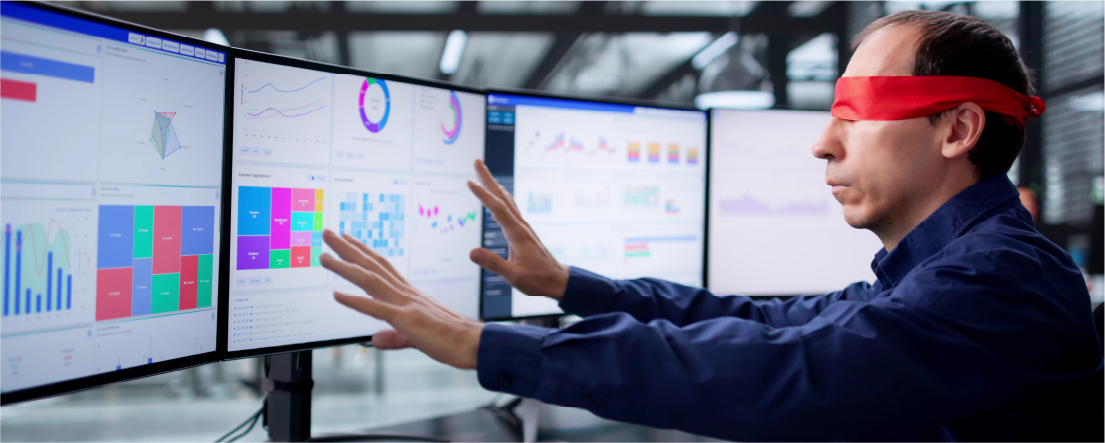
Cardiff told the story of a customer that had built what looked like a model safety operation. Dashboards for everything — ELDs, dash cams, FMCSA portal, claims, HR. A disciplined coaching cadence. Top offenders on every list got a conversation. By any reasonable measure, they were doing the work.
And their crash numbers wouldn't move.
When they finally dug in to figure out why, the answer was uncomfortable. The drivers actually crashing weren't at the top of any single dashboard. They were sitting just below the surface on several of them, never bad enough on any one metric to trigger attention, but quietly compounding risk across all of them.
It’s not that the data was wrong. The problem was that they were looking at it in silos and reacting to individual signals, instead of taking a bigger picture look and being proactive.
That’s the promise of using AI and collective data to predict future risk and address it before the crash happens. AI is able to sift through all that data and understanding the patterns and what they mean. But, as we’ll see, you still can’t leave it all to AI. That human connection is vital.
The Trap of Single-Metric Thinking
Most fleets don't have a data shortage. They have a streams problem.
Every system — telematics, cameras, FMCSA, dispatch, HR, the LMS — can be its own dashboard, have its own "worst offenders" list, and its own coaching workflow. Safety teams do what humans naturally do: they focus on the worst offenders. Top of the camera list gets coached. Most violations gets coached. Hours-of-service violators get coached.
What gets missed is the driver who's maybe 10th or 11th on three different lists at once.
Industrial safety has known this pattern for nearly a century. Heinrich's safety triangle taught us that major incidents sit on top of a much wider base of minor ones. The trucking version of that lesson means that the warning signs of a serious crash are not the obvious ones that slap you in the face. They're quiet, scattered, and they show up in several places at the same time.
It’s by seeing that bigger picture, the tough-to-spot patterns, that you can spot the drivers who really need your attention. That’s the lesson the carrier in Cardiff’s story learned.
This is also why the leading-versus-lagging-indicator debate matters less than people think. A telematic event is a leading indicator if you treat it as part of a pattern. It's a lagging indicator if you treat it as a one-off to be coached and closed.
What that means is that we’re all looking at the same information. But those fleets that simply react to a hard brake with punitive coaching and training are putting themselves at risk. The signal isn't in the metric, it's in how you look at it.
We’ve noticed in the data from our 2026 Best Fleets to Drive For® program that the fleets making the biggest difference are those that take a big picture approach to safety and training. They’re looking beyond solving today’s problem and finding opportunities to take actions that solve the next three or four problems down the road.
The promise of predictive analytics is that it pulls those future problems out of the haze and presents you with a clear view of where to focus. But is it real or hype?
What's Actually Changed in Predictive Analytics
For years, AI has been touted as a savior for nearly every industry. Today, it’s tough to find a technology vendor in trucking that doesn’t mention and AI boost to their service.
We’ve talked about the risks of experimenting with AI before, especially if you don’t have a clear goal in mind. The ability of using predictive analytics to identifying the drivers who are really at risk of a crash is a pretty compelling goal. But are we there?
For a long time, Cardiff explained, the models gave you a name and a number. A driver and a risk score. That left safety managers asking, "Okay, now what?" Often that “now what” was to assign corrective coaching and a training course and move on.
The real shift over the last few years in this technology is that the outputs got explainable. Modern AI models can tell you which specific behaviors, across which specific data sources, are pushing a driver into a high-risk pattern, says Cardiff. That context can help you take a more proactive, holistic approach to your coaching and training.
It’s also true that the financial pressure to get this right has rarely been higher. The median nuclear verdict in trucking hit $36 million in 2022, a roughly 50% jump from 2013, according to ATRI. And in ATRI's 2025 Top Industry Issues report, lawsuit abuse reform and insurance availability moved up to the second and third spots on the industry's list of concerns. The pressure isn't easing. The fleets that can demonstrate a defensible, proactive safety process will be rewarded for it. The ones that can't will subsidize them.
Why Prediction Without Coaching Is Just an Expensive Way to Be Surprised
So, with predictive analytics, fleets are able to turn data into insights that, when used the right way, can help them identify drivers at risk of an incident before it happens. But, that’s only half the job. AI can’t solve the whole problem. You still need the human in the loop.
We've talked about the reactive version: a hard-braking event triggers an automated training assignment, the driver clicks through it, and the cycle repeats. Drivers learn that the inbox means trouble and start to cringe when the phone rings. Engagement drops. So does the actual learning. Coaching that becomes punishment serves no one.
What works looks different. When a predictive model surfaces a driver because their pattern points to looming risk, the response isn't a single click-through. It's a structured plan over a couple of weeks that combines a manager conversation, a targeted training module, and a follow-up touchpoint, all aimed at the specific behavior the model identified. Predictive analytics tells you who and why. The training delivers the what, in a format that scales without dragging your safety team into hundreds of one-off conversations a month.
The fleets we see making real progress from our Best Fleets data, have stopped treating coaching and training as the consequence of a bad event and safety as a checklist and started taking a big picture view of safety and applying coaching and training before the bad event happens.
A Final Word
Here are three final takeaways from our webinar summing up this part of the conversation:
- Stop treating each dashboard as its own program. Your data sources need to inform a single picture of driver risk, not five competing ones.
- Don't try to build the predictive model yourself. Crashes are statistically rare events and no individual fleet has enough data to train a reliable model on its own. This is work for a partner with aggregated, anonymized data across the industry.
- Connect prediction to a real coaching workflow. A risk score that doesn't trigger a structured training and coaching plan is just a more expensive scorecard.
To listen to the full conversation, watch the webinar replay here.